Office clearance in Peckham

Office clearance in Peckham should be straightforward, organised and careful with what leaves the premises. We handle the removal of unwanted office items, helping businesses clear desks, chairs, storage, filing and general workspace clutter in a way that keeps the job practical from start to finish. The aim is to leave you with a usable space and a sensible route for items that need separating, reusing, recycling or disposing of.
Our service is suited to workspaces that are being reconfigured, reduced, vacated or refreshed. It can include full room clearances or targeted removal from specific areas such as meeting rooms, storerooms, back offices and reception spaces. Where items are bulky, awkward or mixed with paper, cabling and fittings, careful planning matters. Clear access, item sorting and responsible handling all help keep the work efficient and reduce disruption to the building.
For a quotation, send the main details of the clearance and the items involved. If you already know what needs removing, that helps us discuss the right approach more quickly. If you are comparing options, you can also review our pricing and quotes page before making contact, then choose the next step that suits your timetable.
What our office clearance service covers

Office clearances vary widely, so the service needs to be flexible rather than one-size-fits-all. Some jobs involve a handful of redundant desks and chairs after a layout change, while others need an entire floor or suite cleared before handover. We can deal with mixed office contents, including freestanding furniture, storage units, light fixtures that are part of the clearance scope, archived material and general non-hazardous waste that has accumulated over time.
Commercial clearances often need a careful order of work. Larger items usually come out first, followed by smaller contents and any loose waste that has built up around them. This helps prevent damage to walls, floors and doorframes. Where there are multiple types of material, separating them sensibly at source is often the most practical way to manage disposal. That can support reuse of suitable furniture and reduce the amount sent for disposal.
Typical items removed from workplaces
Many office jobs involve a combination of furniture and everyday business waste. Common examples include desks, task chairs, meeting tables, pedestal drawers, shelving, cabinets, reception furniture, boxed files, monitors, printers and miscellaneous items from storage areas. Some spaces also contain break-room contents, old presentation equipment or broken fixtures that are no longer useful. If there are items you are unsure about, it is better to list them clearly rather than assume they fit within the standard clearance.
Preparing an office for clearance

Good preparation keeps the process clearer for everyone involved. It helps if access routes are open, lifts or stairwells are identified in advance and any items that must stay are separated from items that are leaving. This does not need to be complicated. A short walk-through, a simple inventory or a set of photographs can be enough to show what is in each room and whether there are access issues, fragile surfaces or heavier pieces that may need extra care.
Timing can matter too, especially in shared buildings or occupied offices where collections need to fit around staff, visitors or other tenants. If there are building rules for loading, parking or lift use, it is useful to mention them when requesting a quotation. That allows the job to be planned with fewer delays. Clear instructions at the outset often make the actual clearance more straightforward than a last-minute rush on the day.
If you are not sure how much can be removed in a single visit, describe the office space in plain terms and ask for guidance. The most useful enquiries are usually specific: what rooms are involved, what types of items need taking away and whether there are any access limits. Once you have that information ready, you can use our contact page to request a quotation and discuss the next available step.
Furniture, storage and equipment removal
Office clearances are often driven by furniture replacement or a change in how the workspace is used. We remove the items that no longer fit the room, whether that means outdated desks, surplus chairs, broken cabinets or storage that no longer serves a purpose. Where possible, items in reasonable condition can be treated differently from damaged or obsolete pieces, which helps create a more sensible disposal plan.
It is also common for offices to build up equipment that has reached the end of its useful life. Monitors, towers, printers, small peripherals and old presentation items can all take up valuable floor space even when they are no longer part of daily work. In a clearance, these items are best handled with a clear list so they can be grouped and removed efficiently rather than left to slow the process down.
Some businesses need a selective approach rather than a complete emptying of the premises. That can be useful when one department is moving out, when a meeting suite is being refurbished or when a smaller storage area needs reclaiming. Selective removal gives you a way to clear only what is necessary and keep the items that still support day-to-day work.
Business waste and office contents
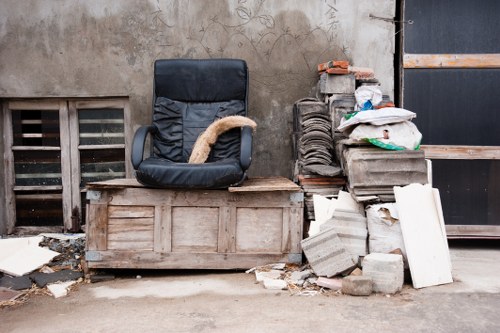
Alongside furniture, office clearances can include general business waste that has gathered in cupboards, corners or storage rooms. The volume is often underestimated because paper, packaging, broken accessories and unused supplies accumulate quietly over time. Clearing them out can make it easier to reorganise the space, identify what is still usable and avoid carrying unnecessary material into a new setup.
If the job includes mixed waste, it helps to think in categories rather than a single pile. For example, one group may contain furniture, another may contain bagged rubbish, and another may contain loose items that need sorting before removal. This kind of separation is useful because it reduces confusion and makes the clearance more orderly. It also helps when there are items that should be kept apart from standard office waste.
Where a business is consolidating or changing premises, the waste picture can be more varied. There may be old signage, shelving, boxed stock, packaging from previous deliveries or items left behind after a move. A practical clearance service focuses on taking away what no longer belongs in the space and leaving the remaining items in a better state for the next stage of use. If that sounds like what you need, business waste removal may also be relevant for broader workplace waste needs.
Recycling and responsible handling

Responsible office clearance is about more than simply emptying rooms. It also means thinking carefully about what can be reused, what needs recycling and what must be disposed of in the correct way. Furniture in usable condition may be suitable for a different setting, while damaged items or mixed waste generally need a separate route. The right handling depends on the type, condition and composition of each item, so clear sorting matters.
Paper, cardboard, metals and some office fittings are often easier to separate than heavily mixed contents, but they still need to be handled with care. Offices can contain sensitive material, so it is sensible to sort documents and confidential items before anything leaves the building. That part of the process is usually best managed within the business itself, with the clearance focused on the physical removal of items once they have been reviewed.
If sustainability is a concern, it is worth asking how different item types are likely to be treated. A careful clearance service should make room for practical decisions rather than forcing everything into one category. You can also look at our recycling and sustainability page to see how materials are approached alongside the wider clearance work. When you are ready to move forward, a clear list of items makes it easier to request an informed quotation.
Planning around access and building rules
Many office buildings have shared entrances, lift restrictions, parking limits or set loading times, and these details can affect how a clearance is arranged. A well-planned job takes account of those practical rules before the work begins. That means checking whether large items will fit through corridors, whether there are any protection needs for floors or walls and whether the route out of the building is suitable for repeated trips.
In multi-storey premises, access planning can be just as important as the removal itself. A straightforward-looking clearance can become slower if items need to be carried a long distance or moved through tight spaces. If you know about any restrictions in advance, mention them when asking for a quotation. That gives a more accurate picture of the work and helps avoid avoidable delays on the day.
For some businesses, the key decision is whether to clear everything in one go or divide the work into stages. A staged approach can be useful when different teams occupy parts of the building or when access is limited to certain times. If the office is part of a larger change, our office clearance page covers the core service again in a more direct format for quick reference.
About Peckham
Peckham is a district in the London Borough of Southwark, in south-east London, and it has a long history of change from rural settlement to dense urban neighbourhood. The area is closely associated with Peckham Rye, the open space that gives part of the district its name, and with Peckham Rye station, a transport hub that has helped shape local movement and development. The district includes a varied mix of streets, estates, independent shops and civic buildings, with a built environment that reflects several periods of growth rather than one single architectural style. Victorian terraces are common in many streets, while later twentieth-century housing and commercial buildings add a different layer to the area’s appearance. Peckham also has cultural landmarks that are well known beyond the immediate neighbourhood, including the multilevel Rooftop environments around contemporary arts, food and leisure uses, and a reputation for creative activity that has evolved alongside everyday residential life. The area’s public spaces, including Peckham Rye Park and Common, provide an important green setting within a busy urban part of London, and the wider district remains shaped by its routes, railway links and local centres. As with many South London districts, Peckham’s character comes from a combination of transport accessibility, layered history and a street pattern that connects housing, shops and community spaces in close proximity.
How a commercial clearance is organised
A sensible office clearance usually starts with identifying the main groups of items and deciding what needs to stay out of the removal area. That can include furniture, loose equipment, bags of waste and any contents stored in cupboards or archive spaces. Once the categories are clear, the work can be arranged in a more ordered sequence, which is especially useful where the building remains in use or where the office is part of a larger business site.
Practical organisation matters because it reduces confusion when several rooms contain different types of item. A reception area may be cleared in one way, a private office in another and a storeroom in a third. Each space can contain different risks, weights and access issues. Rather than treating every room the same, the clearance is easier to manage when it reflects the actual layout and contents of the premises.
When you request a quotation, it helps to think about the scope in simple terms: which rooms are included, what items need removing and whether any pieces are particularly heavy, awkward or mixed in with materials that should stay separate. That information allows the job to be matched more closely to the real work involved. If you need a broader reading of related work, our home clearance page shows a different type of clearance service, while this page remains focused on office premises.
Clearance choices for different workplace situations
Not every office needs the same kind of clearance. Some clients want a partial clean-out after a move or refit, while others need a full emptying before the space is handed back. There are also situations where only a single department, a storage room or a cluster of unused furniture needs attention. Matching the service to the situation keeps the process proportionate and avoids removing items that still have a purpose.
Businesses also differ in how quickly they need the space cleared. In some cases, the priority is to recover floor area so staff can keep working around the job. In others, the priority is a complete reset before new furniture arrives or a lease end approaches. The right approach depends on the premises, the contents and the timeline. A good quotation should reflect those factors rather than relying on a generic estimate.
If your plans include a different kind of clearance elsewhere on the site, you may find flat clearance useful as a separate service page. For office work, though, the main task is to remove commercial contents in a controlled and orderly way, with enough flexibility to fit the building and the items involved.
Requesting a quotation for office clearance
To get a quotation that is genuinely useful, it is best to describe the office as plainly as possible. Include the number of rooms, the main item types and any access details that might affect removal. If there are large cabinets, heavy desks, mixed waste or restricted routes, mention those from the outset. That gives a clearer basis for discussing the work and means the price conversation can focus on the actual clearance rather than guesswork.
It is also helpful to decide who will be available to confirm the items on the day. Some offices prefer a single contact person, while others arrange the clearance around building management or an internal facilities team. Keeping the communication simple can make the process more efficient. If you are ready to take the next step, use the contact page to request a quotation and share the basic details of the job.
Whether the clearance is small or substantial, the best results usually come from clear scope, sensible timing and a straightforward approach to the items in the space. If you want to compare the broad service with other clearance options first, you can also review our about us page for a general company overview before you get in touch.